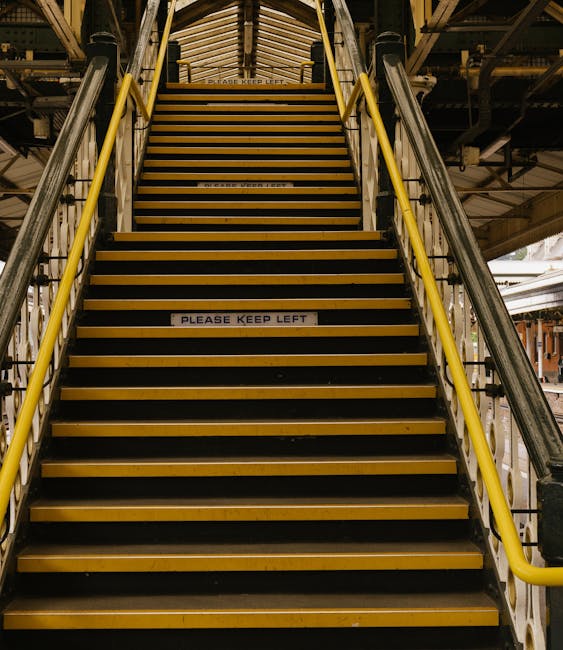
Kings Road movers tips for narrow Chelsea staircases

If you are moving on or near Kings Road, you probably already know the awkward bit is not the street itself. It is the staircase. Chelsea homes and flats often come with narrow staircases, tight turns, shallow landings, and the sort of banister that seems designed to catch every sofa corner going. This guide to Kings Road movers tips for narrow Chelsea staircases gives you practical, real-world advice for making the move calmer, safer, and a lot less stressful.
Whether you are moving into a period flat, a top-floor apartment, or a townhouse with a staircase that feels like a puzzle, the good news is that most problems can be avoided with planning. The trick is not brute force. It is measurement, sequencing, protection, and the kind of judgement experienced movers use every day.
Below, you will find a clear step-by-step approach, a checklist, comparison advice, and a few local insights that can save time on moving day. No fluff. Just the stuff that actually helps when a wardrobe is stuck halfway up the stairs and everybody goes quiet for a second. We have all seen that moment.
Why Kings Road movers tips for narrow Chelsea staircases Matters
Narrow staircases change everything about a move. A piece of furniture that is easy to carry on a straight corridor can become a complicated, risky object once it reaches a compact stairwell with a twist in the middle. In Chelsea, that is not unusual. Many properties have character features, older layouts, and stairs that simply were not designed for modern furniture sizes.
Why does that matter so much? Because the wrong approach can lead to scuffed walls, damaged banisters, torn fabric, broken fittings, and avoidable strain on the people carrying the load. The issue is not just inconvenience. It can affect timing, costs, and confidence. If you are moving in a building with shared access, a clumsy move can also upset neighbours, which is never fun when you are already carrying boxes and a kettle you need by tea-time.
Good planning reduces all of that. It helps movers decide what can go upstairs as a whole item, what needs dismantling, and what should be carried in pieces. It also helps a client understand when a flat removal, a man with a van service, or a more fully managed removal service may be the better fit. For larger moves, it may even be worth looking at flat removals, man and van support, or a more complete removals service depending on the property and the load.
How Kings Road movers tips for narrow Chelsea staircases Works
The basic process is simple, but the detail matters. Experienced movers usually start with access, not with lifting. That means they look at the staircase, the landings, the door widths, the ceiling height at the turns, and the space outside the building. If an item cannot rotate safely, then the team needs a different plan before anybody starts sweating on the first floor.
In practice, the work usually follows a few stages:
- Measure the largest items and the tightest points on the stair route.
- Decide what can be carried as-is and what should be dismantled.
- Protect walls, floors, banisters, and door frames before moving anything heavy.
- Set a carrying order so items are moved in a safe, efficient sequence.
- Use two-person handling, or more, for awkward and valuable pieces.
- Pause and re-plan if the item catches, twists, or blocks the landing.
This is where good movers earn their keep. They are not just lifting. They are problem-solving in real time. A sofa may need to be turned upright. A mattress may need to be flexed slightly. A chest of drawers may need handles removed first. Sometimes the smartest move is to take the item apart before touching the stairs. Simple, but not always obvious when everyone is in a rush.
If you are booking help for a Chelsea flat, it is also worth thinking about packing support. Proper boxes, secure wrapping, and sensible weight distribution all matter. The right packing and boxes approach makes stair carrying easier, and it is even better if you already know that some items will need specialist handling. For fragile or awkward possessions, a professional furniture removals service can reduce a lot of the stress.
Key Benefits and Practical Advantages
When the move is planned properly, the benefits are felt immediately. The staircase stops being an obstacle and becomes simply another part of the route. That sounds modest, but it changes the whole day.
Here are the main advantages:
- Less damage: careful measurements and protection reduce the chance of scuffs, chips, and dents.
- Faster moving day: fewer surprises means less stopping, less re-routing, and less backtracking.
- Lower physical strain: furniture is moved with better control, so the carry feels more manageable.
- Better neighbour relations: less noise, fewer blocked stairwells, and shorter disruption.
- More confidence with valuable items: antiques, mirrors, and large storage pieces are handled more calmly.
There is also a practical money angle, even if nobody likes talking about that mid-move. A well-managed stair move can reduce the risk of delays and avoidable damage. It can also help you choose the right level of service from the start. If you only need loading support, a smaller vehicle such as a removal van may make sense. If the move is larger or involves more bulky furniture, a moving truck may be the better fit.
Expert summary: the safest narrow-stair moves are rarely the strongest ones. They are the best planned ones. Measure first, protect the route, dismantle when sensible, and keep communication clear on every landing.
Who This Is For and When It Makes Sense
This advice is useful for anyone moving in Chelsea, but it is especially relevant if your property has internal stairs that are tight, winding, or shared. That usually includes basement flats, maisonettes, top-floor conversions, and older terraces with narrow access.
You will find this particularly helpful if you are:
- moving into or out of a period property with a slim staircase;
- carrying furniture such as beds, sofas, wardrobes, or dining tables;
- moving with children, pets, or limited time, which means the day needs to stay organised;
- handling a flat move where stair access is the main challenge;
- moving office furniture into a compact building with internal stairs;
- trying to decide between DIY moving and booking professionals.
It also makes sense if you have one or two awkward items rather than a full house of furniture. In those cases, a smaller, more flexible setup can be ideal. A good example is a client who only needs a sofa, two bookcases, and several boxes moved from a first-floor flat. That job may not need a full household operation, but it does still need careful handling. A man with van arrangement may suit that kind of move if the access is tight and the inventory is modest.
On the other hand, if you are relocating a whole home, a family house, or a busy office, it is smarter to think about a fuller service from the start. That could include home moves, house removals, or even office removals for business premises with awkward internal access.
Step-by-Step Guidance
If you want the move to go smoothly, this is the part to follow carefully. It is not glamorous, but it works.
- Measure the staircase properly. Measure the width at the narrowest point, the height at each turn, the landing space, and the door frames. If you have a tape measure, use it on the biggest item first. Don't guess. Guessing is how wardrobes become wall art.
- List the awkward items. Write down anything large, heavy, fragile, or oddly shaped. Beds, headboards, mirrors, cabinets, pianos, and armchairs often need special handling. If you are moving a piano, that is a different conversation entirely, and specialist help such as piano removals is usually the sensible route.
- Decide what should be dismantled. Remove legs, shelves, doors, handles, and anything else that increases width or catches on corners. The fewer protruding parts, the better.
- Pack with stair access in mind. Heavier boxes should be small enough to carry comfortably. Fill boxes evenly. Keep fragile items cushioned, but do not overpack them. A very heavy box on narrow stairs is asking for trouble.
- Protect the route. Cover floors, add corner guards if needed, and wrap delicate surfaces. Stair railings and plaster corners are especially vulnerable.
- Move the largest items first if the route is clear. In some properties, it is easier to move furniture before boxes because the staircase is cleaner and there is more room to manoeuvre. In others, the reverse is better. A decent mover will judge this on site.
- Keep one person directing. Too many voices on a tight staircase can make things worse. One clear lead voice is enough. Short instructions work best: stop, tilt, lift, rotate, pause.
- Take breaks on landings, not on steps. A landing gives the team a safer place to reposition. Steps are for moving, not resting.
- Reassess if the item jams. If an object catches, stop. Forcing it is where damage happens. Reposition, remove another part, or find a different angle.
One practical tip that gets overlooked: leave the kettle, keys, chargers, and basic toiletries easy to reach. The first hour in a new place can feel surprisingly chaotic, especially if everything is boxed up and your phone is on 3% battery. Been there, regretted that.
Expert Tips for Better Results
These are the small details that make a narrow-stair move much easier. None of them are dramatic, but together they save time and headaches.
- Use the right number of people. One extra pair of hands is useful, but too many people in a narrow stairwell becomes clutter. Keep the team lean.
- Wrap corners before the item moves. A sofa arm that is already protected is less likely to snag on paintwork.
- Think vertically as well as horizontally. Sometimes turning an item upright is safer than carrying it flat.
- Check the route from both directions. What looks fine going up may not work coming down, and vice versa.
- Use proper lifting technique, but do not worship it. Good posture matters, but so does practical control. Awkward loads need judgement as much as strength.
- Plan for building noise. Old staircases can echo. If you are moving early in the morning, keep talk low and movements deliberate.
- Book the right service level. For some people, a focused man with a van service is enough. For others, especially if stairs are very tight, more complete removal services are worth it.
To be fair, the best tip of all is to slow down. That sounds obvious, but moving day has a habit of making everyone speak faster and carry faster. Slow is smooth. Smooth is fast. It is the old cliche because it works.
Common Mistakes to Avoid
Most stair-related moving problems come from a short list of mistakes. If you avoid these, you are already ahead.
- Not measuring properly: assuming a wardrobe will fit because it "probably will" is a classic mistake.
- Ignoring the landing: people focus on stair width and forget that the turn is often the real problem.
- Overpacking boxes: a box that feels fine on the floor can be miserable halfway up a stairwell.
- Forgetting protection: one careless scrape can mark a wall or banister in seconds.
- Trying to force bulky furniture through: if it resists, it needs a different method, not more muscle.
- Leaving everything until moving day: dismantling furniture under pressure is slow and frustrating.
- Not checking access restrictions: some properties have shared stairwells, time windows, or awkward entry arrangements that need planning.
There is also the old "we'll just carry it upstairs and see" approach. It sounds efficient. It usually is not. A better plan is to decide in advance what happens if an item does not fit. That tiny bit of foresight can save an hour and a lot of swearing under your breath.
Tools, Resources and Recommendations
You do not need a warehouse of equipment to handle a narrow staircase move well, but the right tools make a real difference.
| Item | Why it helps | Best used for |
|---|---|---|
| Measuring tape | Confirms widths, heights, and landing clearance | Planning before the move |
| Furniture blankets | Protects surfaces from scuffs and knocks | Sofas, tables, cabinets |
| Protective film or wrap | Keeps edges and corners safe | Long carries and tight turns |
| Gloves with grip | Improves control on awkward items | Boxes, frames, furniture |
| Tools for dismantling | Removes legs, handles, shelves, and fittings | Large furniture, beds, wardrobes |
| Floor protection | Reduces damage on stairs and landings | Shared hallways and period properties |
For packing support, a professional packing and unpacking services option can save time if your schedule is already stretched. If items are too bulky to keep in the property for long, temporary storage can also make the move easier by letting you split the job into stages.
It is also sensible to think about how the move is booked and managed. The practical side matters. Good communication, clear terms, and straightforward payment all reduce stress, which is why pages like pricing and quotes, payment and security, and terms and conditions can be useful to review before moving day.
Law, Compliance, Standards, or Best Practice
Moving furniture on narrow stairs is not just about convenience. It is also a safety matter. In the UK, moving teams are expected to work carefully, reduce risk where possible, and avoid creating hazards for themselves or others. That means proper manual handling practice, route planning, and sensible use of equipment.
For a homeowner or tenant, the main thing to know is straightforward: if a property has shared access, you should be mindful of other residents, fire routes, and basic building safety. Keep stairwells clear. Do not block exits. Avoid leaving boxes or furniture in communal areas longer than necessary. If you are in a managed building, a quick check on access expectations is usually a good idea.
Professionally, movers should also have suitable insurance and safety processes in place. You can look for reassurance in places like insurance and safety and health and safety policy. Those pages do not move the sofa for you, obviously, but they do show that risk is being taken seriously rather than treated as an afterthought.
If sustainability matters to you, it can also be worth checking whether unwanted furniture will be reused, recycled, or responsibly removed. A move is often a good time to reduce clutter rather than transport things you no longer need. That is where recycling and sustainability and even furniture pick up can fit naturally into the plan.
Options, Methods, or Comparison Table
If you are deciding how to manage a narrow-stair move, the best option depends on the size of the load, the access, and how much help you need. Here is a simple comparison.
| Method | Best for | Pros | Trade-offs |
|---|---|---|---|
| DIY move | Very small moves and light boxes | Lowest direct cost, flexible timing | Higher physical effort, more risk on tight stairs |
| Man and van | Small to medium moves | Flexible, practical, often quicker for local jobs | May need more planning for bulky furniture |
| Full removals service | Whole-house or complex flat moves | More support, better handling of awkward items | Typically more coordination required |
| Storage split move | When access is tight or timings are staggered | Reduces pressure on moving day | Needs extra scheduling and planning |
If your staircase is especially unforgiving, the move is often easier when you combine methods. For example, use man with van support for a compact load, then place oversized items into storage temporarily until you have the right access or a better time window. Not every move needs to be done in one heroic push. Sometimes a two-stage move is simply smarter.
Case Study or Real-World Example
Picture a small Chelsea flat on an upper floor off Kings Road. The staircase is narrow, the turn is sharp, and the walls are freshly painted. The move includes a bed frame, mattress, compact sofa, two shelves, several boxes, and a mirror. Nothing outrageous, but enough to cause trouble if handled casually.
In a situation like that, the smoothest result usually comes from breaking the work into a few simple decisions. The bed frame is dismantled before the team arrives. The mirror is wrapped and moved separately. The shelves are emptied, and the boxes are packed so the heaviest items are in smaller cartons. The sofa is checked against the landing width before anyone lifts it. If it looks tight, it is rotated on the ground floor first rather than halfway up the stairs, where options get limited very quickly.
The move feels slower at the start. Then, oddly enough, it becomes faster. Why? Because the team is not improvising at every turn. The hallway stays clear. The banister is protected. The stairwell does not fill with clutter. The client is not standing there wondering if the sofa is going to make it. That calm, methodical approach is what saves the day.
And yes, the kettle usually ends up in the first box you open. Or at least it should.
Practical Checklist
Use this before moving day, especially if your property has a narrow Chelsea staircase.
- Measure the staircase, turns, landings, and doorways.
- Identify the largest and heaviest items early.
- Decide what should be dismantled.
- Pack heavier items into smaller boxes.
- Wrap corners, edges, mirrors, and furniture surfaces.
- Protect the staircase, floors, and banisters.
- Clear hallways and landing space.
- Confirm who is directing the carry on the day.
- Check whether you need storage for items that do not need to move immediately.
- Review insurance, safety, and terms before booking.
- Set aside essentials for the first night in the new place.
Quick takeaway: if you only remember one thing, remember this: narrow staircases reward preparation. Measure first, reduce bulk, protect everything, and keep the team calm.
For readers comparing options, it can help to speak with a team that understands local access issues and can advise on the right mix of services, whether that is removal services, house removals, or a more tailored approach for a compact flat move. If you need a better sense of the next step, the main site and the about us page are sensible places to start.
Get a free quote today and see how much you can save.
Conclusion
Moving on Kings Road or anywhere in Chelsea with a narrow staircase is never going to be entirely effortless, but it does not need to be chaotic. The better the planning, the easier the carry. Once you understand the access, pack with the stairs in mind, and choose the right moving support, the whole day becomes much more manageable.
That is really the heart of it. Not brute force. Good judgement. A steady pace. A clear plan. And, just as importantly, the ability to stop and rethink when something does not feel right. The staircase may be narrow, but your options are wider than they first appear.
In the end, a well-handled move gives you something rare on moving day: a proper sense of relief. And honestly, that feeling when the last box is in and the stairs are behind you? Worth the planning.
Frequently Asked Questions
How do you move furniture up a narrow Chelsea staircase?
Start by measuring the staircase and the largest furniture pieces. Dismantle anything possible, protect the walls and banisters, and carry items with a clear lead person directing the movement. If the item catches, stop and re-plan rather than forcing it.
What furniture is most likely to cause problems on narrow stairs?
Wardrobes, sofas, mattresses, large tables, mirrors, and beds are the usual troublemakers. Anything wide, tall, or awkwardly shaped tends to create issues at landings and turns.
Should I dismantle furniture before a move in Chelsea?
Usually, yes, if dismantling makes the item narrower or easier to carry. Removing legs, handles, shelves, and bed frames often saves time and reduces damage risk.
Is a man and van service enough for a flat on Kings Road?
It can be, especially for small or medium moves with limited furniture. If the staircase is very tight or the inventory is bulky, a fuller removals service may be more suitable.
How do movers protect narrow staircases from damage?
They normally use floor coverings, corner protection, furniture blankets, and careful carrying techniques. In many cases, they also plan the order of items so the biggest or most awkward pieces are moved at the safest time.
What should I measure before moving day?
Measure stair width, landing size, ceiling height at turns, door frames, and the dimensions of your largest items. Measuring just the stairs is not enough because many problems happen on the bends.
Can I move a sofa up a narrow staircase?
Sometimes, yes. It depends on the sofa's size and shape, as well as the stair layout. Sofas with removable feet, slim arms, or modular sections are usually easier to manage.
What if my furniture does not fit up the stairs?
Do not force it. The safer options are to dismantle further, change the carrying angle, or use an alternative plan such as storage or a different access method. Forcing a large item is where damage happens fastest.
Do narrow staircases make moving more expensive?
They can, because they often require more time, more care, and sometimes extra handling. The final cost depends on the property, the load, and whether special equipment or additional labour is needed.
Should I use storage during a move with difficult access?
Storage can be a smart solution if not everything needs to arrive at once or if access is too tight for all items on the same day. It reduces pressure and gives you more control over the move.
How far in advance should I plan a narrow-stair move?
The earlier, the better. A few days is better than nothing, but a proper pre-move check gives you time to measure, dismantle, pack properly, and choose the right service.
What is the biggest mistake people make on narrow stairs?
The most common mistake is underestimating the landing or turning space. People focus on the straight stair width and forget that a turn is often the point where the move becomes difficult.